
On this page
Tap a topic to jump to it.
- What Are Wisdom Teeth and Why Do They Cause Trouble?
- Signs a Wisdom Tooth Needs Attention
- How a Wisdom Tooth Is Removed
- Aftercare and Recovery
- Wisdom Teeth, Crowding and Braces
- Cost and Planning Your Extraction
- Possible Complications and How We Reduce Them
- Common Questions About Wisdom Teeth
- Planning Wisdom Tooth Removal With Other Treatment
- Eating, Cleaning and Healing
- Wisdom Tooth Removal: CGHS Dentist Near Me, Accredited Care
 Tap to enlarge
What Are Wisdom Teeth and Why Do They Cause Trouble?
Wisdom teeth are the last molars to appear, usually between the late teens and mid-twenties. By then, there is often not enough room left in the jaw. A wisdom tooth may grow at an angle, press against the tooth in front or stay partly trapped under the gum. These are called impacted wisdom teeth.
A partly covered tooth is hard to clean, so food and bacteria collect under the gum flap and cause repeated infection. Others push on the second molar and damage it, or cause decay between the two teeth that is hard to spot until it is advanced.
Signs a Wisdom Tooth Needs Attention
- Repeated pain or swelling at the back of the jaw.
- A red, sore gum flap behind the last molar.
- A bad taste or bad breath that keeps coming back.
- Difficulty opening your mouth fully.
- Decay or gum problems in the tooth in front of the wisdom tooth.
- A wisdom tooth growing sideways or only part-way through.
You may have a wisdom tooth with no symptoms that still needs review, because X-rays can show problems before they hurt. A short examination and an X-ray tell us where the teeth are and what to do.
How a Wisdom Tooth Is Removed
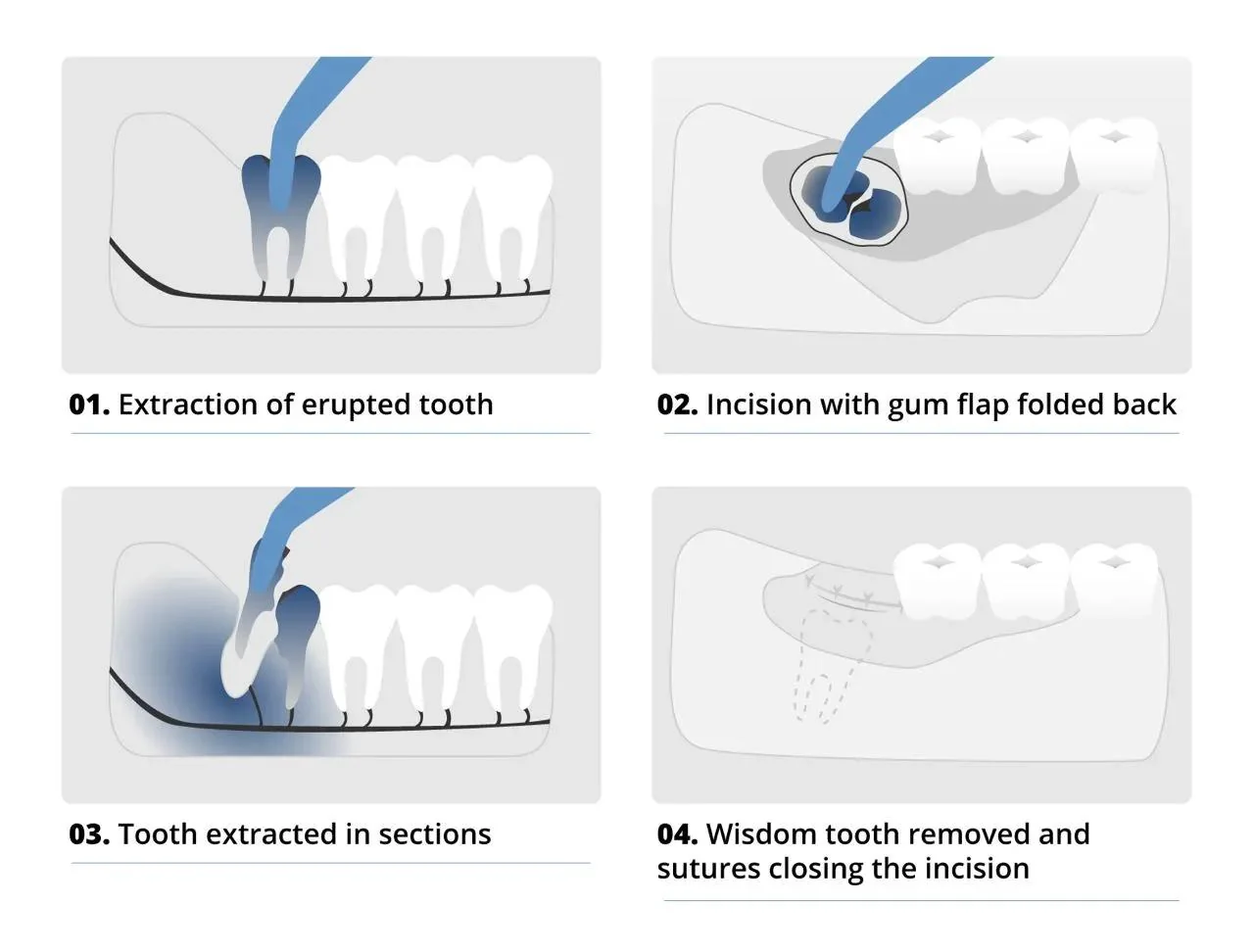
We begin with an X-ray so we can see the position of the tooth, its roots and the nerves nearby. The area is then fully numbed. For a tooth that has come through, removal can be quick and simple. An impacted tooth may need a small opening in the gum, and sometimes the tooth is divided into pieces so that it can be removed gently.
You will feel pressure but not pain. If you feel anxious, tell us in advance, and we will go at your pace and explain each step as we go. We give you written aftercare instructions and medication, and we tell you when to return for review.
Aftercare and Recovery
- Bite on the gauze as advised to control bleeding.
- Avoid spitting, rinsing hard and drinking through a straw on the first day.
- Eat soft, cool food and chew on the other side.
- Avoid smoking, which slows healing.
- Use a cold compress on the cheek for swelling in the first day.
- Take medicines exactly as prescribed.
Most people feel much better within a few days, and the gum heals over the next couple of weeks. Call us if bleeding or swelling gets worse after the first couple of days, if you develop a fever, or if you notice severe pain that begins several days after the extraction.
Wisdom Teeth, Crowding and Braces
Wisdom teeth are often checked before or during orthodontic treatment, because your dentist wants to know whether they are likely to cause problems. Whether wisdom teeth make the front teeth crowd is still debated, so we recommend removal when a wisdom tooth causes problems of its own, not simply to protect your alignment.
If you are planning braces treatment in Greater Noida, an X-ray will show where your wisdom teeth are and whether they need attention. At Noida Dental Hospital we check wisdom teeth during the assessment for clear aligners in Greater Noida and braces, so there are no surprises mid-treatment. A braces dentist in Greater Noida will explain whether the wisdom teeth are likely to affect your plan.
Teeth that have been straightened need retainers to stay in place. A search for a teeth alignment specialist near me or an orthodontist near me should lead you to a clinic that explains this clearly. Our orthodontic clinic in Greater Noida section describes what a full assessment includes.
Cost and Planning Your Extraction
The cost depends on the position of the tooth, how difficult the removal is, whether it is impacted and how many teeth are being removed. A simple extraction costs less than an impacted tooth that needs a small surgical opening. We give you an estimate after your X-ray and examination.
If more than one wisdom tooth needs removing, we can discuss whether to take them out together or in stages, and plan around your work or study schedule. Please ask us about payment options for your treatment plan. Clear, upfront pricing is the same principle behind our guide to affordable braces in Greater Noida.
Possible Complications and How We Reduce Them
Wisdom tooth removal is a common and safe procedure, but you should know what can happen. Dry socket, where the blood clot is lost and the bone is exposed, causes severe pain a few days after extraction and is more likely in smokers. Infection, prolonged bleeding and temporary numbness of the lip or tongue are less common. For lower wisdom teeth, the nerves are close, which is why we take an X-ray and plan carefully.
We reduce the risks with careful technique, clear aftercare instructions and early review. Call us if your pain gets worse after the third or fourth day, because that can be a sign of dry socket and it is easy to treat.
Common Questions About Wisdom Teeth
Do I have to remove a wisdom tooth that does not hurt? Not always. If it has fully come through, is healthy and is easy to clean, it can stay. If it is trapped and cannot be cleaned, or an X-ray shows damage to the tooth next to it, we recommend removal before it causes trouble.
How long will I be off work? Many people return to work in a day or two after a simple extraction. After a surgical extraction, you may want a few days. Should I take all four out at once? That depends on your teeth and your comfort. We discuss it with you and decide together.
Will I look swollen? Some swelling is normal for a few days and peaks about the second day. A cold compress on the first day helps.
Planning Wisdom Tooth Removal With Other Treatment
If you are planning other treatment, the order matters. Wisdom teeth are often removed before braces or implants, or at a point in orthodontic treatment that your dentist decides. If you are looking for a braces specialist near me or an orthodontic clinic in Greater Noida, ask how they handle wisdom teeth.
Patients searching for a dentist for braces near me or clear aligners near me are often surprised to find that the first visit includes a wisdom tooth X-ray. We recommend this because it helps to prevent surprises. Anyone comparing clinics, whether an affordable orthodontist near me or the best orthodontist in Greater Noida, should expect the same careful planning. Our guide to affordable braces in Greater Noida and clear aligners cost in Greater Noida explains how to compare costs.
Eating, Cleaning and Healing
For the first day, stick to soft, cool food such as yoghurt, smoothies (without a straw), mashed potato and soup that is not hot. Over the next days, add soft foods like rice and eggs as your comfort allows. Avoid small, hard foods such as nuts and seeds that can lodge in the socket.
From the day after, rinse gently with warm salt water after meals, and brush your other teeth as normal, avoiding the area. Do not poke the socket with your tongue or fingers. Keep drinking water and rest on the first day.
Wisdom Tooth Removal: CGHS Dentist Near Me, Accredited Care
Searching for a CGHS dental hospital near me because a wisdom tooth hurts? Our hospital welcomes CGHS cardholders, and emergencies need no prior permission under the scheme.
Removal of an impacted tooth is a small surgical procedure, which is why we work as a NABH accredited dental hospital in Greater Noida, with written procedures for consent, sterilisation and aftercare. See our NABH page for what that means.
When you may need wisdom tooth extraction
- Repeated pain or swelling at the back of the jaw
- A wisdom tooth that is stuck or growing sideways
- Food getting trapped and causing decay or gum infection
- Damage to the neighbouring molar
- Difficulty opening the mouth fully because of a wisdom tooth
What to expect
- X-ray and planningAn X-ray shows the position of the tooth and nearby nerves, so we can plan the safest approach.
- NumbingLocal anaesthesia numbs the area. Tell us if you feel anxious and we will go at your pace.
- RemovalThe tooth is removed gently. An impacted tooth may need a small opening in the gum.
- Aftercare instructionsWe give you written aftercare advice and medication, and tell you when to return for review.
Benefits
- Relief from repeated pain and swelling
- Protects the neighbouring teeth
- Easier cleaning at the back of the mouth
- Clear advice on healing and recovery
Questions about wisdom tooth extraction
Do all wisdom teeth need to be removed?
No. Wisdom teeth that are healthy, fully erupted and easy to clean can stay. We recommend removal when a tooth causes problems or is likely to.
Will the extraction hurt?
The area is numbed first, so you should feel pressure but not pain. Some soreness for a few days afterwards is normal.
What should I do after the extraction?
Bite on the gauze as advised, avoid spitting and drinking through a straw on the first day, eat soft cool food, and avoid smoking. Call us if bleeding or swelling gets worse.
How long is the recovery?
Most people feel much better within a few days, and the gum heals over the next couple of weeks. It varies with the tooth and the person.
This page gives general information. Every mouth is different, so the right treatment and timeline depend on your examination.