On this page
Tap a topic to jump to it.
- Common Causes of Toothache
- When Toothache Is an Emergency
- What You Can Do at Home Before You See Us
- How We Treat Toothache
- Pain, Broken Brackets and Lost Aligners
- Preventing the Next Toothache
- Toothache Myths and Facts
- Toothache in Children
- Urgent Care and Choosing a Clinic Near You
- After Emergency Treatment
- Toothache and Emergencies: CGHS and NABH Accredited Care
Common Causes of Toothache
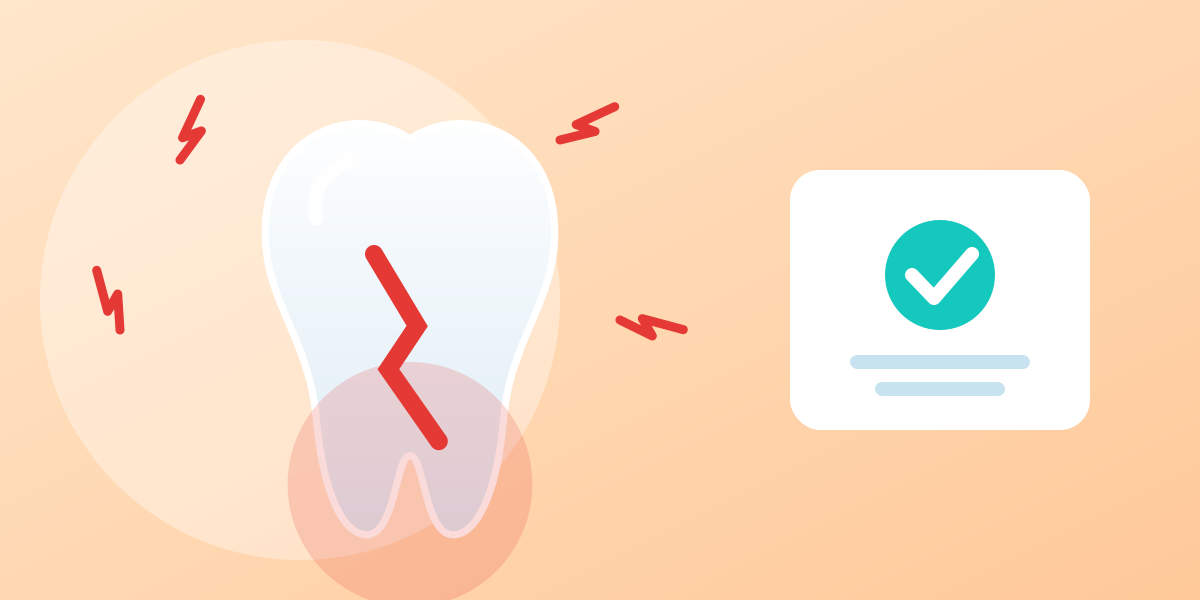
Toothache has several possible causes, and the right treatment depends on which one you have. The most common are decay that has reached the nerve, a cracked tooth, an infection at the root, gum disease, a loose or broken filling, and a partly erupted wisdom tooth.
Sensitivity to cold or sweet food is often an early warning of decay or exposed root surface. Sharp pain on biting suggests a crack or a high filling. A deep, constant ache that keeps you up at night usually means the nerve is involved. A thorough examination and an X-ray let us find the real cause instead of guessing.
When Toothache Is an Emergency
Call us immediately if you have:
- Swelling of the face, jaw or gum.
- A fever together with tooth pain.
- Pain that no tablet can control.
- A tooth that has been knocked out or broken.
- Bleeding that will not stop after a procedure.
Go to a hospital emergency department if you have difficulty breathing or swallowing. For everything else, call or WhatsApp us, tell us your symptoms and we will find you the earliest suitable time.
What You Can Do at Home Before You See Us
Rinse gently with lukewarm salt water to clean the area. Keep your head slightly raised when you lie down, because lying flat can increase the throbbing. A cold compress on the cheek helps with swelling. Take pain relief exactly as directed on the pack.
Do not place aspirin or any other tablet directly on the gum, because it can burn the tissue. Avoid very hot, cold and sweet food on the painful side. Home care eases symptoms for a while, but it does not treat the cause, so please do not wait for the pain to go away on its own.
How We Treat Toothache
Treatment starts with relieving the pain, then fixing the cause. Depending on what we find, this may mean removing decay and placing a filling, cleaning out an infection, treating the root canal, adjusting a high filling, treating the gums or removing a tooth that cannot be saved.
We explain the diagnosis and the options before we begin, and we give you an estimate for the full treatment. If you need a root canal, we will tell you what the procedure involves and how many visits are likely to be needed.
Pain, Broken Brackets and Lost Aligners
Some discomfort is normal for a few days after braces are fitted or tightened. Persistent or sharp pain, a bracket that has come loose, or a wire that pokes into your cheek needs attention. Until you can be seen, orthodontic wax over the sharp part can help, and you should not cut the wire yourself.
If a clear aligner cracks or goes missing, call us before moving on to the next set. If you wear braces and need help quickly, a braces dentist in Greater Noida can repair brackets and relieve pain. Searching for a braces specialist near me or a clear aligner dentist near me in a hurry? Call or WhatsApp us and describe the problem.
For ongoing care, see braces treatment in Greater Noida, and for discreet options read about invisible braces near me and invisible braces in Greater Noida. If you are looking for a dentist for braces near me in an emergency, the most useful thing you can do is to call first, so we can prepare for your visit.
Preventing the Next Toothache
Most toothaches can be prevented. Brush for two minutes twice a day with fluoride toothpaste, clean between your teeth daily, limit sugary snacks between meals and visit for a check-up and clean every six months. Small cavities are quick to fix, while a neglected one can end up needing a root canal.
If you wear braces or aligners, brush after every meal before putting the aligners back in, and use interdental brushes around brackets. If you grind your teeth, ask about a night guard. And if a filling or crown feels rough or loose, have it checked early.
Toothache Myths and Facts
A few beliefs cause real harm. Putting aspirin or clove on the gum is not safe or effective in the long run; aspirin can burn the gum, and clove oil only numbs briefly. A toothache that suddenly stops does not mean the problem has gone; it can mean the nerve has died and the infection is spreading. Antibiotics alone do not cure a tooth infection: they may calm it, but the tooth still needs treatment.
Another myth is that you should avoid the dentist when a tooth is swollen. In fact, a swollen face is a reason to be seen quickly. The sooner we see you, the simpler the treatment is likely to be.
Toothache in Children
Children often cannot tell us exactly what hurts. Look for signs such as refusing to eat, holding the cheek, crying at night, swelling or a dark tooth. A child with swelling or a fever should be seen the same day.
Do not wait for a milk tooth to fall out on its own if it is painful. Infection in a milk tooth can affect the adult tooth underneath. Our kids’ dentistry approach is gentle, and we explain what we are doing in simple words. If you are looking for a braces specialist near me or an orthodontist near me for a growing child, it is better to ask at a routine visit than during an emergency.
Urgent Care and Choosing a Clinic Near You
In an emergency, you want a clinic that is close and that will see you quickly. Noida Dental Hospital welcomes patients from across Greater Noida and nearby areas. Call or WhatsApp first, so we can prepare for your visit and tell you what to do while you travel.
When you are not in pain, it is wise to find a clinic for ongoing care. People ask us about a dentist for braces near me, clear aligners near me, invisible braces near me, a clear aligner dentist near me, a teeth alignment specialist near me, an affordable orthodontist near me and a best dentist for braces near me, and we explain what to look for in each guide. Planning ahead, for example choosing a braces dentist in Greater Noida before you start treatment, means you know whom to call if a bracket breaks. If you want a complete change after the emergency is over, ask us about a smile makeover dentist near me and a smile correction clinic in Greater Noida plan.
After Emergency Treatment
Emergency treatment often relieves pain at the first visit, but it may not be the final treatment. A tooth might need a root canal, a crown or an extraction after the infection has settled. We explain what is next and why it matters.
Please do not stop at the emergency visit. A temporary filling or dressing is just that: temporary. Finishing the treatment protects you from the same pain returning, and it is often cheaper than starting again after a break.
Toothache and Emergencies: CGHS and NABH Accredited Care
A toothache is an emergency for the person who has it. If you are a cardholder looking for a CGHS dentist near me or CGHS empanelled dentist in Greater Noida, note that under CGHS rules, emergencies do not need a prior referral or permission letter at an empanelled hospital.
Call us straight away. We follow the standards of a NABH dental hospital near me search result you can verify: clean instruments, clear consent and a calm approach. See our CGHS page.
When you may need toothache & emergency care
- Throbbing or constant tooth pain
- Pain that wakes you up at night
- Facial or gum swelling
- A tooth that has broken, chipped or been knocked out
- A lost filling or crown with pain or sensitivity
- Bleeding that does not stop after a dental procedure
What to expect
- Call or WhatsApp usTell us your symptoms so we can see you as early as we can.
- Find the causeWe examine the area and take an X-ray when needed.
- Relieve the painTreatment starts with relief, such as cleaning out infection, adjusting a filling or draining an abscess.
- Plan the next stepIf you need a root canal, filling, crown or extraction, we explain it clearly before we begin.
Benefits
- Quick assessment of the cause
- Pain relief as the first priority
- Clear explanation of options
- Follow-up care so the problem does not return
Questions about toothache & emergency care
What can I do at home while I wait for my appointment?
Rinse gently with lukewarm salt water, keep your head slightly raised, and use a cold compress on the cheek if it is swollen. Take pain relief as directed on the pack. Do not put aspirin on the gum.
When is a toothache an emergency?
Facial swelling, fever, trouble swallowing or breathing, or bleeding that will not stop need urgent care. Call us straight away, and go to a hospital emergency department if you have trouble breathing or swallowing.
What if my tooth gets knocked out?
Pick it up by the crown, not the root. Rinse it briefly with milk or water without scrubbing, and try to place it back in the socket or keep it in milk. Call us immediately.
Will I need a root canal for every toothache?
No. Pain can come from decay, a loose filling, gum infection or sensitivity. We diagnose it first, then choose the simplest treatment that works.
This page gives general information. Every mouth is different, so the right treatment and timeline depend on your examination.